In the drilling industry, wear is an inevitability. Every meter drilled is a battle between the equipment and the geology, and eventually, the geology wins. However, there is a significant difference between natural wear and premature failure. When a crossover, sub, or manifold fails before its time, it’s more than just an equipment cost, it’s a symptom of a deeper technical misalignment that drains project ROI through downtime and lost production. As a leader in custom manufacturing, Pinnacle Drilling views tool wear not as a “cost of doing business,” but as a data point. By understanding the specific mechanics of why equipment fails, we can engineer the solutions that extend their lifecycle.
The Mechanics of Accelerated Failure
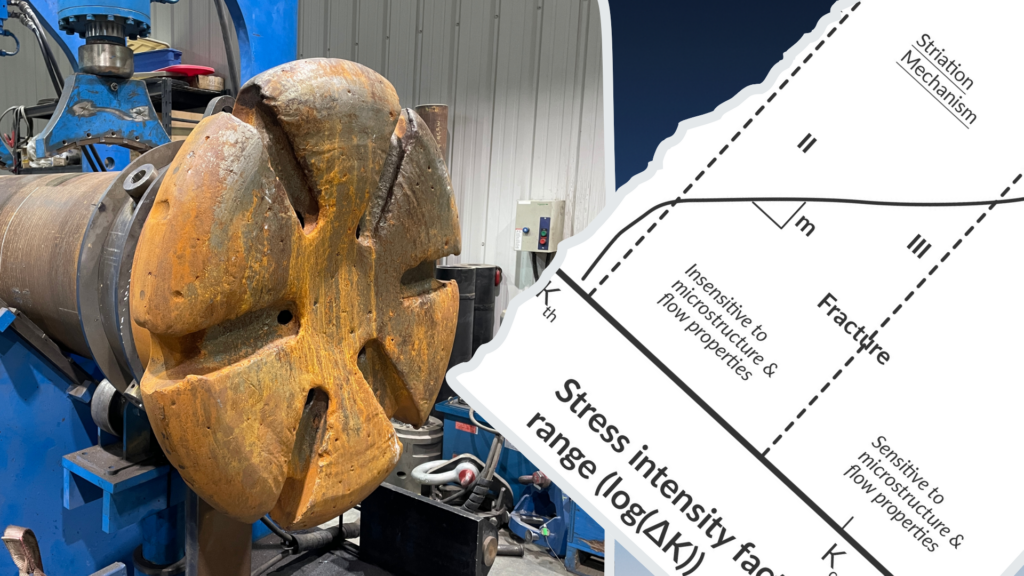
Most premature wear isn’t caused by a single catastrophic event, but by subtle factors that occur long before the tool reaches the rig floor. It often starts with misaligned metallurgy; standard components are typically built for a generic average of conditions, but the Canadian landscape rarely offers an average day. If the steel’s hardness and grain structure aren’t perfectly matched to the abrasiveness of the formation, you get a “sandpaper effect” that strips the tool’s profile far faster than anticipated. This is often exacerbated by poor flow geometry. In high-pressure applications, if the internal transitions of a sub or manifold aren’t precision-engineered, the resulting turbulence creates internal hot spots and erosion. Instead of a consistent stream, the air or fluid creates a “cyclone” effect that degrades the metal from the inside out, leading to micro-cracking and eventual structural fatigue.
This mechanical stress is often compounded by the parasitic vibration that comes from “make-do” solutions. When a contractor is forced to use an adapter or a crossover that doesn’t perfectly align with the specific torque demands of their string, the resulting harmonics don’t just wear the tool they vibrate the entire assembly. This creates unnecessary stress at every thread and connection point, leading to premature fatigue that can be traced back to a single poorly fitted component. By focusing on these underlying physics, we can move the “failure point” from the field to the engineering phase, ensuring the equipment is built to deflect wear rather than just absorbing it until it breaks.
The Role of Custom Engineering in Prevention
The most effective way to prevent premature wear is to utilize a feedback loop between the shop floor and the field. At Pinnacle, we don’t just build to a generic spec; we build to a scenario. By studying components that have come back from the field “worn out,” we identify the exact patterns of failure and feed that data back into our engineering department. Before a custom crossover or specialized manifold is even fabricated, we use technical reviews and CAD modeling to simulate the stresses it will encounter. We analyze how the metallurgy handles the specific abrasiveness of the target ground and how the internal geometry manages flow under pressure.
This marriage of technical science and hands-on fabrication is what allows us to produce specialized components that are intentionally over-engineered for the “worst-case” scenario. If we know a client is heading into a project with high torque requirements and abrasive geology, we don’t just provide a standard sub—we engineer the body geometry and selecting the alloys to ensure the tool stays in the hole longer. It is an iterative process of constant improvement that ensures that when a piece of gear leaves our floor, it’s been grit-tested before it ever hits the dirt.
Conclusion: Protecting Your Performance
In an industry where uptime is the only metric that matters, the goal isn’t just to replace gear it’s to prevent the wear from happening in the first place. By focusing on precision metallurgy, flow dynamics, and project-specific engineering, Pinnacle Drilling is helping our partners move past the “standard” lifecycle of their equipment. We’re proud to lead the industry in building tools that aren’t just field-ready, but are engineered to perform better and protect the bottom line of every project we support.
